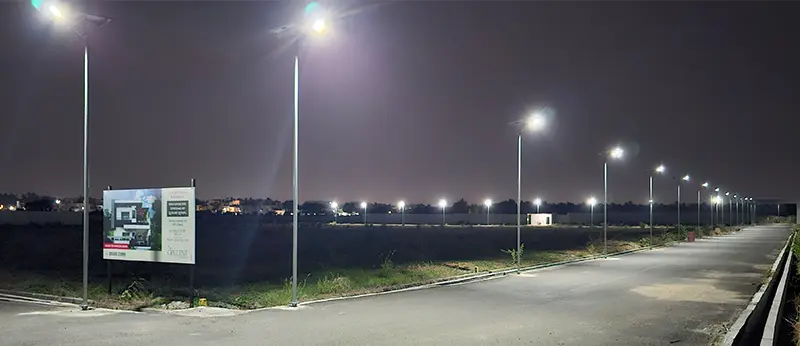
A solar grid-tied inverter transforms DC output from PV modules into AC power suitable for grid transmission or self-consumption, adhering to grid codes by providing reactive power. It optimizes power output through MPPT while monitoring the system and grid connection. Each solar inverter in power plants connects PV module arrays or strings to the grid. Higher inverter efficiency leads to better LCOE, enhancing electricity cost-effectiveness.
How does it work?
Grid-tied PV inverters function at a reduced, safer voltage from the PV module array, offering enhanced reliability, flexibility, and energy output. Employing lower voltages on the PV side eliminates potential high voltage risks on rooftops, providing peace of mind to installers and service staff. Utilizing multiple shorter strings of panels, these inverters ensure multiple pathways for electricity flow, minimizing power losses caused by changing environmental or panel conditions..
Working Principle
Installation of the Grid Tie Solar Inverter involves wall mounting and connecting the PV array's DC input and the utility's AC output..
Features:
- Optimal Efficiency: This ensures high reliability and efficiency with minimal auxiliary consumption, resulting in a quick return on investment. MPPT efficiency exceeds 99.9%, while maximum efficiency reaches over 97.5%
- PV Compatibility: Designed to work seamlessly with high-voltage PV string arrays, supporting input voltages with a maximum power point range of 150 to 550 Vdc.
- Maximum Power Point Tracking (MPPT): Utilizes advanced MPPT technology to extract the maximum energy from the solar array. Offers single and double MPP trackers to cater to diverse application requirements.
- Proven Technology Platform: Built on a reliable and durable platform, ensuring a long operating life and a secure return on investment.
- Compact, state-of-the-art design: features a transformerless design that optimizes space utilization. Easy and fast installation and serviceability contribute to reduced overall costs.
- Robust Enclosure with an IP65 Rating: Suitable for outdoor installation, providing excellent protection against environmental factors.
- Communication Interface & Monitoring Software: Equipped with a communication interface and monitoring software for efficient system management and performance tracking.
Specification
| Type of Solar Cells | Mono / Poly Crystal Line |
| Inverter | PCU |
| Wave Form | Sine Wave |
| Battery Type | Tubular / C10 Rating |
| Charging Hour | 5 - 6 Hours |
| Operating Volts | 230 Volt AC |
| Mounting Structure | MS Painted |
| Interconnecting Wires | Provided |
Application
1. Educational Institutes
2. Residential
3. Small & Medium Commercial
4. Hospitals & Hotels
If you are interested in learning more about grid-tied solar power plants in Coimbatore, contact Sunlit today. We will be happy to answer any questions you have
Solar Water Heater
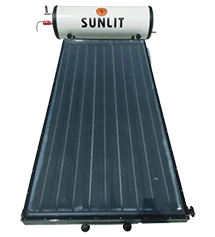
Sunlit Solar's modern technology will improve your water heating experience in Coimbatore. Our environmentally friendly solar water heaters are a dependable and cost-effective water heating solution for your home and business. Our high-quality systems, supported by solar energy expertise, provide peak performance and energy efficiency. We provide professional installation services to integrate clean, renewable solar energy into your daily life.
Solar Dryer
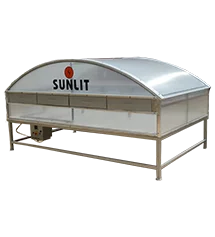
We offer a wide range of solar dryers in Coimbatore, including solar mini dryers, solar tunnel dryers, solar parabolic dryers, heat pump dehydrators, electric dryers, and solar portable dryers. Our products are designed to be energy-efficient, sustainable, and affordable. With solar dryers, you can dry your food and other products quickly. Our team will help you choose the right solar dryer for your needs.